
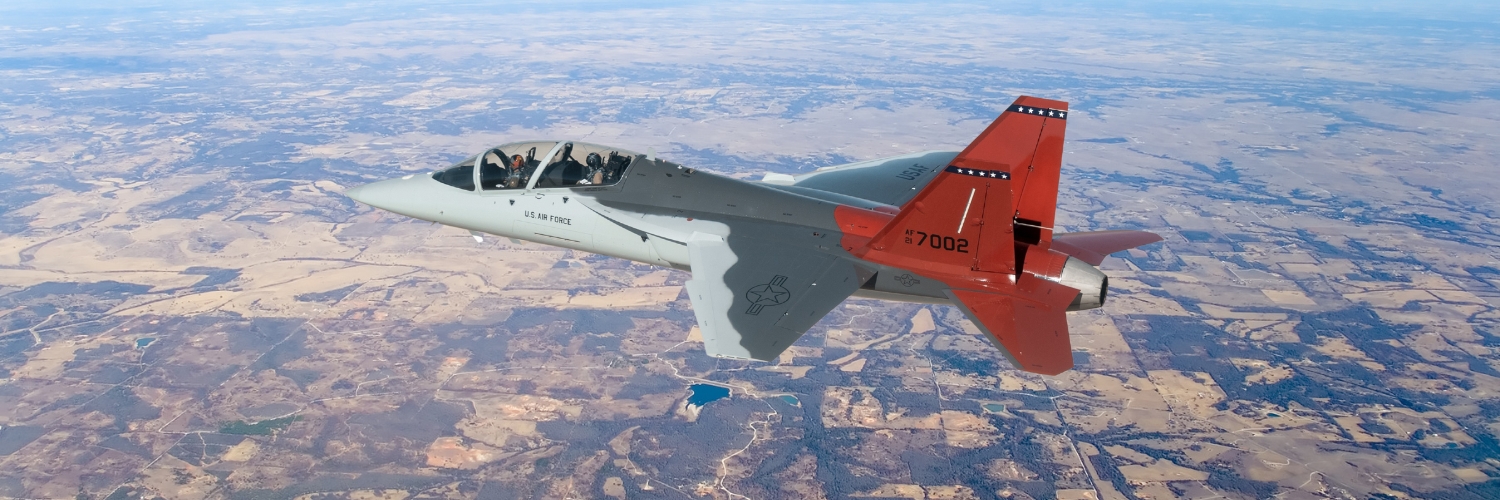
HMMH provided comprehensive aircraft noise analysis and documentation support for Environmental Impact Statements (EISs) evaluating the United States Air Force’s (USAF) proposed replacement of the T-38C training aircraft with the T-7A Red Hawk at Vance Air Force Base (OK) and Sheppard Air Force Base (TX). Working as a subconsultant to HDR, HMMH supported data collection, modeling, and technical reporting to assess potential noise impacts associated with airfield operations and Special Use Airspace (SUA) activities.
A key challenge of the project was the absence of pilot operating data for the T-7A. To address this deficiency, HMMH developed a power setting conversion spreadsheet to translate T-38 operational parameters into representative T-7A conditions, ensuring consistent modeling inputs.
HMMH conducted both virtual and on-site data collection efforts in coordination with Air Force personnel and subject matter experts. These efforts captured detailed operational information, including flight activity levels, aircraft types, flight tracks and profiles, sortie timing, and maintenance operations. Modeling encompassed complex SUA environments, including multiple Military Operating Areas (MOAs), Military Training Routes (MTRs), and restricted airspace associated with each installation.
Using the Department of Defense’s NOISEMAP suite, HMMH generated Day-Night Average Sound Level (DNL) contours for the Baseline, No Action, and Proposed Action alternatives, as well as Onset-Rate Adjusted Monthly Day-Night Average Sound Levels (Ldnmr) for SUA operations. Additional analyses included Maximum Sound Levels, Sound Exposure Levels, and a range of supplemental metrics to evaluate potential effects on the community, such as sleep disturbance, speech interference, classroom learning disruption, and the potential for hearing loss.
HMMH also prepared detailed aircraft noise sections for the EIS documents and developed Noise Model Operational Data Description (NMODD) reports for both bases, ensuring compliance with USAF and NEPA requirements. This work provided a robust technical foundation to support informed decision-making regarding the future of pilot training operations at these installations.